
When you first start playing poker, it is easy to call because a hand "looks strong," because you "might hit," or because a bet "feels too big to call." Pot odds give you a way to check whether a call is profitable in numbers.
This guide covers the pot odds formula and a quick-reference chart, the rule of 2 and 4 for turning outs into equity, flush draw and gutshot examples, bluff-catching, preflop big blind defense, and how pot odds differ from implied odds. You do not need to memorize much. Start with two benchmarks: a 1/2 pot bet needs 25% equity, and a pot-sized bet needs about 33%.
What Are Pot Odds?
Pot odds compare the amount you must call with the pot you can win, and tell you the minimum equity you need to break even.
Say the pot is 100 chips and your opponent bets 50. You must call 50 to continue. After your call, the pot is 100 + 50 + 50 = 200 chips. You risk 50 to win a 200-chip pot.
Required equity = Call amount ÷ Pot after your call
Here, 50 ÷ 200 = 0.25, so you need 25% equity. If your hand wins more than 25% of the time, calling is profitable in theory. If it wins less, calling usually loses money.
Pot odds do not ask whether your hand looks strong. They ask whether the price you pay matches the reward you can win.
Why Pot Odds Matter
In Texas Hold'em you are often behind right now but can still improve on the turn or river. Flush draws and straight draws are the classic examples. With a flush draw you may be losing to top pair, but one more card of your suit puts you ahead.
The key question is not "I might hit, so I call." It is whether the price is small enough compared with how often you actually win. A cheap price for a big pot makes calling easy. A low chance to win at a high price usually means folding.
Pot odds help with decisions like:
- Whether to call with a flush draw
- Whether to continue with a gutshot
- Whether to fold to a large bet
- Whether a small bet makes a call reasonable with ace-high or second pair
- Whether a bluff-catch is mathematically reasonable
Pot odds are a foundation for defending against bets in general, not only for draws. For the other leaks beginners run into, see 10 Texas Hold'em Beginner Mistakes.
How to Calculate Pot Odds (With a Chart)
Use this simple process:
- Look at the current pot
- Add your opponent's bet
- Add your call amount to get the pot after your call
- Divide the call amount by the pot after your call
- Compare that number with your equity
Here is a quick-reference chart for a pot of 100 and common bet sizes.
| Opponent's Bet | Bet Amount (Pot = 100) | Pot After Call | Pot Odds | Required Equity |
|---|---|---|---|---|
| 1/4 pot | 25 | 150 | 5:1 | About 16.7% |
| 1/2 pot | 50 | 200 | 3:1 | 25% |
| 3/4 pot | 75 | 250 | About 2.3:1 | 30% |
| Pot-sized | 100 | 300 | 2:1 | About 33.3% |
| 2x pot | 200 | 500 | 1.5:1 | 40% |
A ratio such as "3:1" means the pot before your call (including your opponent's bet) to the call amount. Facing a 1/2 pot bet, the pot is 150 and you call 50, so the pot odds are 3:1. To convert a ratio to required equity, use 1 ÷ (a + 1), where a is the first number. For 3:1, that is 1 ÷ 4 = 25%.
Smaller bets need less equity and larger bets need more. If you write the bet size as a fraction b of the pot, required equity is also b ÷ (1 + 2b). For a 3/4 pot bet (b = 0.75), that is 0.75 ÷ 2.5 = 30%.
The expected value (EV) of a call is equity × pot before your call − chance of losing × call amount. Required equity is the equity at which that EV is exactly zero. At 25% equity, 0.25 × 150 − 0.75 × 50 = 0, so you neither win nor lose.
If you only memorize two numbers, make them 25% for a 1/2 pot bet and about 33% for a pot-sized bet. That alone removes a lot of instinct calls.
Count Outs and Compare With Equity (Rule of 2 and 4)
Pot odds alone do not tell you whether to call. You must compare required equity with your actual equity. If required equity is 25% and your hand wins about 35% of the time, calling is profitable. If required equity is 33% and your hand wins only 20%, folding is usually better.
For draws, count your outs: the remaining cards that turn your hand into a likely winner. On the flop, 47 cards are unseen (52 − your 2 cards − 3 board cards). A flush draw has 9 outs, so the chance to hit on the next card is 9 ÷ 47 ≈ 19%.
For a quick mental estimate, use the rule of 2 and 4:
- One card to come: outs × 2 (%)
- Turn and river both to come: outs × 4 (%)
| Draw | Outs | One Card (Exact) | Turn + River (Exact) | Rule of 2 and 4 |
|---|---|---|---|---|
| Flush draw | 9 | About 19.1% | About 35.0% | 18% / 36% |
| Open-ended straight draw | 8 | About 17.0% | About 31.5% | 16% / 32% |
| Gutshot | 4 | About 8.5% | About 16.5% | 8% / 16% |
| Two overcards | Up to 6 | Up to about 12.8% | Up to about 24.1% | 12% / 24% |
Be careful with "two overcards = 6 outs." If you hold A-K on a T-7-2 board, an ace or king may give you top pair, but you can still lose to a set or two pair. Not every out is a clean out.
Always separate two situations: you are only guaranteed to see one card, or you can see both the turn and the river. On the flop, your opponent can bet again on the turn and make you pay more before the river. You can use the two-card number when you are facing an all-in, or when your opponent has so little stack left that you effectively see both cards for one price.
On the flop, use the one-card equity for your direct pot odds check. If it falls short, ask whether implied odds (extra chips you win when you hit) can make up the gap. On the turn only one card is left, so the one-card number applies directly.
Example 1: Calling With a Flush Draw
The pot is 100 and your opponent bets 50. You have a flush draw that is not the nuts. Call amount: 50. Pot after call: 200. Required equity: 50 ÷ 200 = 25%.
Pot 100, opponent bets 50 (1/2 pot)
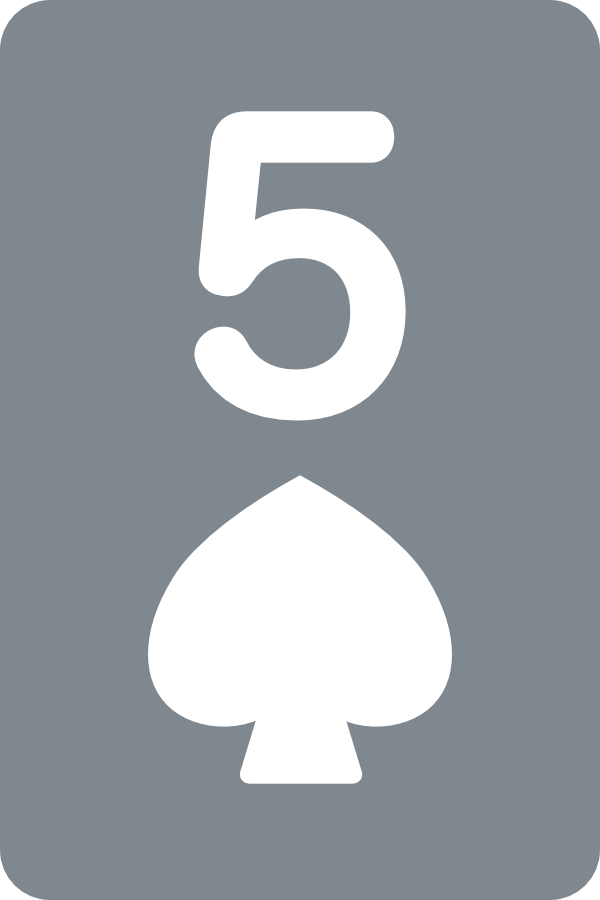
Four spades are on the flop. One more spade completes your flush.




- Required equity: 50 ÷ 200 = 25%
- Chance to complete the flush on the turn: 9 ÷ 47 ≈ 19%
On direct pot odds alone, 19% falls short of 25%. Do not think, "I have 35% with two cards, so this call is clearly profitable."
The gap is about 6 points. Ask whether implied odds can cover it.
The extra amount you need to break even is 50 ÷ 0.19 − 200 ≈ 60 chips (about 0.6x the pot). If you expect to win 60 or more additional chips on average when you hit, the call works. It works best when your opponent has a deep stack and the turn price stays affordable.
- A non-nut flush can lose to a higher flush, and a completed flush can lose to a full house (reverse implied odds).
- Against a pot-sized bet (about 33% needed), the gap to 19% is much larger. A pure flush draw with no overcards or backdoor equity rarely makes up that gap with implied odds.
A good way to remember it: on the flop against a 1/2 pot bet, a flush draw is slightly short on direct pot odds and becomes a call candidate once implied odds are reasonable.
Example 2: When Not to Call With a Gutshot
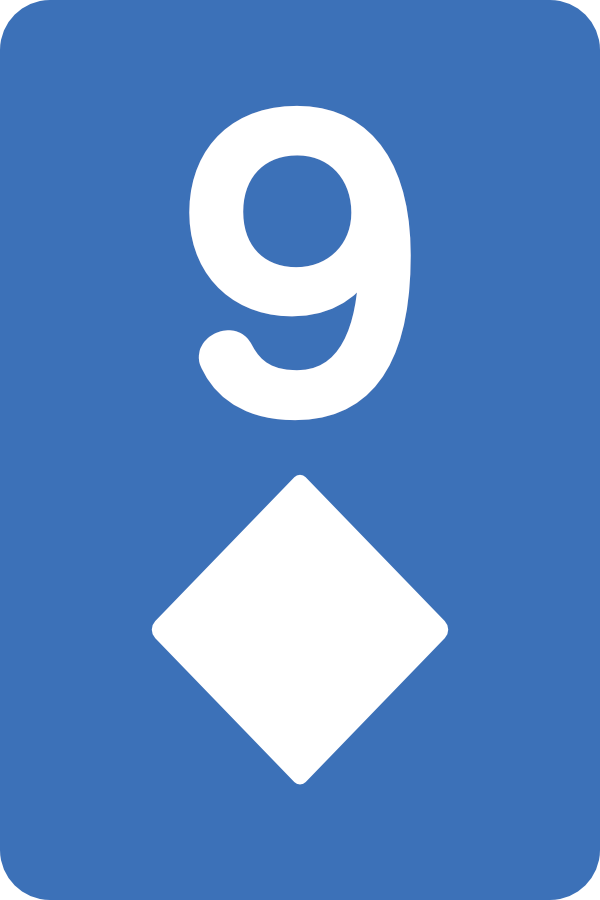
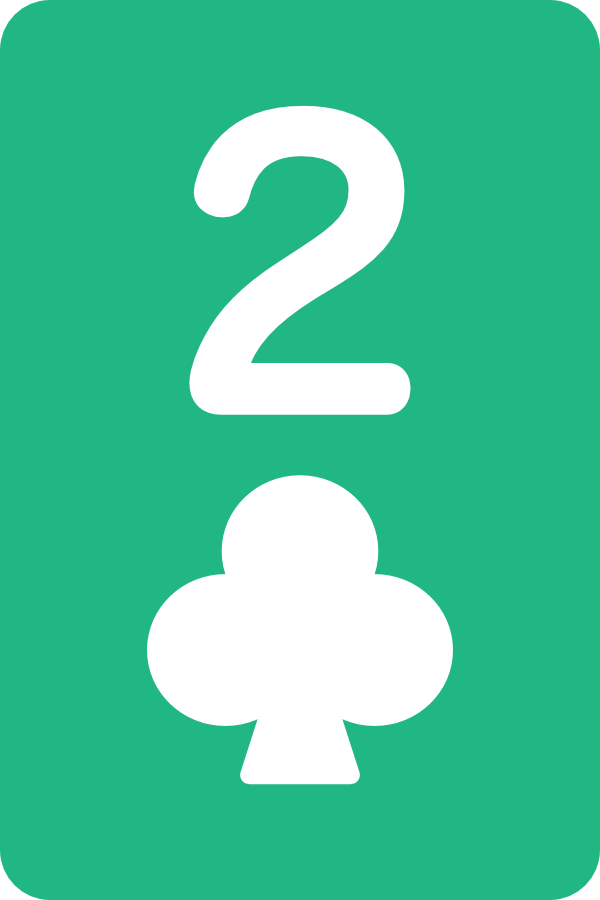
The pot is 100 and your opponent bets 100 (pot-sized). You have a gutshot: only four specific cards complete your straight. Call amount: 100. Pot after call: 300. Required equity: 100 ÷ 300 ≈ 33.3%.
Pot 100, opponent bets 100 (pot-sized)
Any eight completes the straight (7-8-9-10-J). Only four eights remain.



- Required equity: 100 ÷ 300 ≈ 33.3%
- Chance to complete the straight on the turn: 4 ÷ 47 ≈ 8.5%
- Even with both turn and river: about 16.5%
- The bet is very small
- You have extra outs such as overcards or a backdoor flush draw
- You expect to win a lot more when the straight comes
8.5% is far below 33.3%, and even the two-card estimate of about 16.5% does not get there. On direct pot odds, folding is natural.
To justify the call with implied odds, you would need to win 100 ÷ 0.085 − 300 ≈ 875 extra chips (about 8.8x the pot) when you hit. That is almost never realistic.
A common beginner mistake is calling because "if I hit a straight, I will be strong." A strong finished hand does not matter if the chance to get there is too low and the price is too high. Calling a large bet with only a gutshot is the first leak to remove.
Pot Odds and Bluff-Catching
Pot odds also apply to bluff-catching. A bluff-catch is calling with a hand that loses to value hands but beats bluffs.
Say the pot is 100 on the river and your opponent bets 50. Required equity is 25%. If your hand beats only your opponent's bluffs, your equity equals the share of bluffs in their betting range. So if your opponent bluffs at least as often as your required equity, the call does not lose money (here, 1 bet in 4).
| Opponent's Bet | Required Equity | Bluff Share Needed in Their Range |
|---|---|---|
| 1/2 pot | 25% | 1 bet in 4 |
| Pot-sized | About 33.3% | 1 bet in 3 |
Bluff-catching is harder than draw math. It depends on how often your opponent bluffs at that size and whether you hold blockers to their bluffs. Small bets need less equity, so calls are easier. Large bets need more bluffs in their range. That is enough to start with.
Pot Odds Preflop: Defending the Big Blind
Pot odds are not only for the flop, turn, and river. Defending the big blind is the classic preflop use.
Say the blinds are 5/10, the button raises to 25, and the small blind folds. You have already posted 10 in the big blind, so you only need to add 15 to call. The pot after your call is the button's 25, the small blind's 5, your 10, and your 15 call, which is 55.
Required equity = 15 ÷ 55 ≈ 27.3%
Because the big blind has already paid part of the price, it gets a cheaper call than any other seat, which is why you can defend many hands there. But you play out of position after the flop, so the equity you actually realize is lower than the raw number. Adjust for your position and your opponent's range. For raw preflop win rates by hand, see Preflop Win Rates.
Pot Odds vs Implied Odds
Pot odds use only the current pot and the current price. Implied odds include the extra chips you might win on later streets if you improve. A gutshot alone may fail pot odds, but if you complete the straight and win a big extra bet, the call can become profitable.
Beginners often overestimate implied odds. "If I hit, I will win a lot" sounds good, but opponents may fold, or you may improve and still not get paid.
| Implied odds are realistic when... | Be careful when... |
|---|---|
| Your opponent has enough stack left | Your opponent is short-stacked |
| Your made hand is disguised | Your draw is obvious on the board |
| Your opponent likely pays off with one pair or two pair | Your opponent is tight and folds to extra bets |
How deep the stacks are relative to the pot is covered by SPR (stack-to-pot ratio). First use pot odds to take clearly profitable calls and remove clearly losing ones. Treat implied odds as the next step.
A Simple Decision Framework for Beginners
You do not need perfect math every hand. Start with this:
- Is the bet small or large? Think in fractions of the pot
- Do I have clear outs?
- Compare required equity with my estimated equity (the next card only, on the flop)
- If equity is enough, call. If not, check implied odds, and if it is still tight, lean toward folding
- Flush draws and open-ended straight draws are often close against a 1/2 pot bet and may continue with implied odds
- Gutshot-only calls against pot-sized bets are usually too loose
- Small bets can justify calls with second pair, ace-high, or backdoor equity
- Large bets usually need strong made hands or strong draws
To avoid building a big pot with marginal hands, see also Pot Control in Poker.
How nlh.poker Helps You Practice Pot Odds
The best way to improve at pot odds is to review real hands after you play. On nlh.poker, you can play free No-Limit Texas Hold'em online, review hand history street by street, and check stats like VPIP, PFR, and showdown results.
After a session, pick one call or fold where you were unsure. Write down the pot size, bet size, required equity, and your estimated equity. For a full routine, read How to Review Poker Hands. To test specific hand matchups, use the Odds Calculator.
FAQ
Quick answers to the questions people often ask about pot odds.
What is the difference between pot odds and equity?
Pot odds describe the price: how much you must pay to win how large a pot. That price sets the equity you need to break even. Equity is how often your hand actually wins. If your equity is higher than the required equity, the call is profitable in theory.
If pot odds are 3:1, what equity do I need?
You need 25%. With pot odds of a:1, required equity is 1 ÷ (a + 1). So 3:1 is 1 ÷ 4 = 25%, 2:1 is 1 ÷ 3 ≈ 33.3%, and 5:1 is 1 ÷ 6 ≈ 16.7%.
Do I have to calculate pot odds on every hand?
No. If you memorize a few benchmarks, you can handle most spots: a 1/2 pot bet needs 25%, a 3/4 pot bet needs 30%, a pot-sized bet needs about 33%, and a 2x pot bet needs 40%.
Should I always call when I have a draw?
No. Check whether your draw equity reaches the required equity, or whether implied odds can cover the gap. A weak draw such as a gutshot facing a large bet is one of the most common losing calls.
Do pot odds work in tournaments?
They work, but you need to adjust. In tournaments, chips are not worth their face value because of ICM (the relationship between chips and prize money), so the equity you actually need is usually higher than the chip-EV number. The numbers in this article are cash-game (chip EV) benchmarks.
How do I calculate pot odds when the bet is bigger than my stack?
Your call is capped at your remaining stack. For example, if the pot is 100, your opponent bets 500, and you have 200 left, you call 200. The uncalled 300 is returned, so the pot after your call is 100 + 200 + 200 = 500, and your required equity is 200 ÷ 500 = 40%.
Summary
Pot odds compare your call amount with the pot you can win and tell you the minimum equity you need to call profitably.
- Formula: Required equity = Call amount ÷ Pot after your call
- Benchmarks: 25% for a 1/2 pot bet, 30% for 3/4 pot, about 33% for a pot-sized bet, and 40% for a 2x pot bet
- Estimate draw equity with the rule of 2 and 4, and use the next card only on the flop
- Cover any gap with implied odds, but keep your estimate conservative
- When bluff-catching, required equity equals the bluff share your opponent needs
When you use pot odds consistently, instinct calls decrease and your defense against bet sizing improves. Review real hands until the math feels natural.