

Quick-reference rules summary for Texas Hold'em. For the full walkthrough with examples and a complete hand replay, see How to Play Texas Hold'em: Complete Rules for Beginners. For what NLH means, see What Is NLH in Poker?
Texas Hold'em rules at a glance
Texas Hold'em is the most popular poker format in casinos, home games, and online play. Each hand has up to four betting rounds, and the winner is the last player standing—or the player with the strongest five-card hand at showdown.
| Topic | Rule |
|---|---|
| Your cards | Two private hole cards per player |
| Board | Five community cards (flop 3, turn 1, river 1) |
| Your hand | Best five-card poker hand from seven cards (2 hole + 5 board) |
| Streets | Preflop → flop → turn → river → showdown (if needed) |
| Forced bets | Small blind and big blind posted before cards are dealt |
This guide focuses on the flow you will see in common no-limit games. Tournament details such as all-in side pots and minimum raise sizes can vary by venue—see the references at the end for official wording.
The core rule: pick the best five cards from seven
You do not play "your two cards plus three board cards." You may use any five from your two hole cards and the five board cards.
- Both hole cards, one hole card, or zero hole cards
- If the board alone is your strongest five-card hand, you play the board
For hand strength, kickers, and split pots, read the full poker hand rankings chart.
Button, blinds, and antes
Before cards are dealt, the table uses a dealer button (BTN) that moves one seat clockwise after each hand. The button marks who would deal in a live game and—more importantly—who acts last postflop.
In a typical game, the player left of the button posts the small blind (SB) and the next player posts the big blind (BB). Blinds are forced bets posted before anyone sees hole cards. They are live chips already in the pot.
Example: calling a raise when you are in the blinds
In a 5/10 game (SB = 5, BB = 10), if a player raises to 25 total:
- SB puts in 20 more (25 − 5 already posted)
- BB puts in 15 more (25 − 10 already posted)
Other players put in the full 25 to call unless they were already facing a larger raise.
One hand from deal to showdown
Here is the standard order. Betting can end early if everyone folds.
| Step | What happens | Betting round |
|---|---|---|
| 1 | Blinds posted; each player receives two hole cards | — |
| 2 | Action starts left of the big blind | Preflop |
| 3 | Three community cards dealt (the flop) | Flop |
| 4 | Fourth board card dealt (the turn) | Turn |
| 5 | Fifth board card dealt (the river) | River |
| 6 | Remaining players table cards; best hand wins | Showdown |
Preflop
After hole cards are dealt, the first voluntary action is the seat to the left of the big blind (often UTG in 6-max). Players fold, call, or raise in order. If no one raises, the big blind may check to see the flop because the BB is already a live bet.
Flop, turn, and river
The dealer burns one card, then deals the flop (three cards). On the flop, turn, and river, betting usually starts with the first active player to the left of the button—often the small blind if still in the hand. The button acts last when still involved.
On each street, if no bet is facing you, you may check or bet. After a bet, players may fold, call, or raise until action closes.
For seat-by-seat order in 6-max and heads-up, see Texas Hold'em action order on every street.
Showdown
If two or more players remain after the river, hands go to showdown. Each player makes the best five-card hand they can. The strongest hand wins the pot; identical best hands split the pot.
A common live rule: the last player to bet or raise on the river shows first. If the river was checked through, showdown order often starts near the button.
Betting actions
| Action | When you can use it |
|---|---|
| Fold | Give up the hand and forfeit any chance at the pot |
| Check | Pass when no bet is facing you (postflop or as BB preflop) |
| Bet | Put the first chips into the pot on that street |
| Call | Match the current bet or raise to stay in |
| Raise | Increase the price after someone bet or raised |
| All-in | Bet your entire remaining stack |
You cannot call when nobody has bet—you would check or bet instead. In no-limit Hold'em, a full raise is generally at least the size of the previous bet or raise (short all-ins can be an exception depending on house rules).
Hand rankings (quick reference)
From strongest to weakest, standard Hold'em uses these ten categories. A full chart with examples, kicker rules, and beginner mistakes is here: poker hand rankings chart.
| Rank | Hand | Beats |
|---|---|---|
| 1 | Royal flush | Everything |
| 2 | Straight flush | Four of a kind or lower |
| 3 | Four of a kind | Full house or lower |
| 4 | Full house | Flush or lower |
| 5 | Flush | Straight or lower |
| 6 | Straight | Three of a kind or lower |
| 7 | Three of a kind | Two pair or lower |
| 8 | Two pair | One pair or high card |
| 9 | One pair | High card |
| 10 | High card | Only weaker high-card hands |
Example hands (with card images)
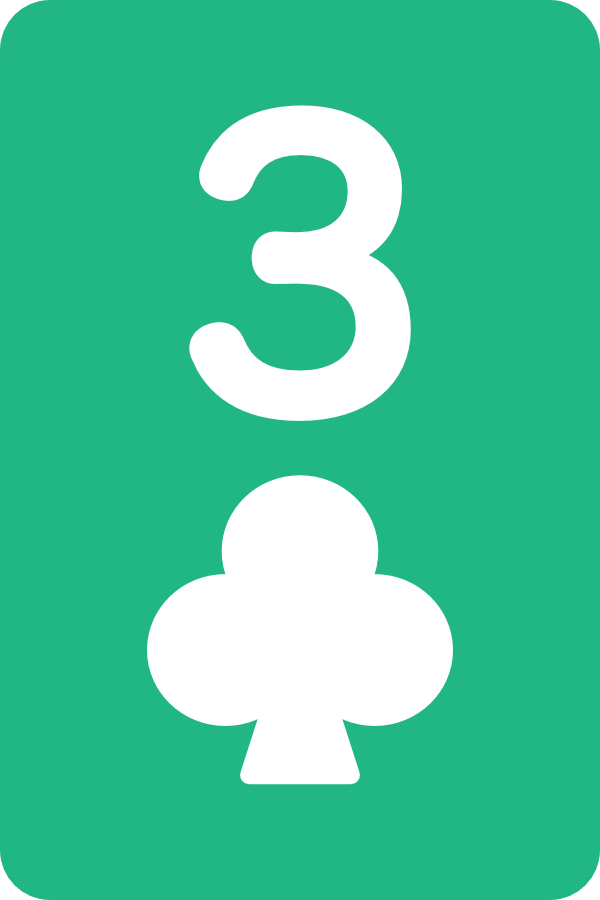
Each example shows five cards that form one hand category. At showdown you always compare best-five hands—see the full rankings chart for kicker and split-pot rules.




















FAQ
Do I have to use my hole cards?
No. If the five board cards are your best hand, you play the board. Many split pots happen this way.
What is the difference between check and call?
A check passes with no new money when no bet faces you. A call matches an existing bet. Calling with no bet on the table is not a legal action.
What happens when someone is all-in?
An all-in player cannot put in more chips later in the hand. If others continue betting with deeper stacks, the pot may split into a main pot and side pot(s). Who can win each pot depends on who contributed to it.
Is Texas Hold'em the same as NLH?
NLH means No-Limit Hold'em—the same game with a betting structure where players can bet any amount up to their stack. See what NLH means in poker for a short overview.
Practice Texas Hold'em online (free)
Once the street order feels clear, practice helps more than rereading rules. On nlh.poker you can play in the browser, review hand history, and track stats like VPIP and PFR. Start with the nlh.poker feature guide or jump into a free table after signup.
References
- PokerStars: Texas Hold'em Rules
- Wikipedia: Texas hold 'em
- WSOP: Poker Hands Chart
- Poker Tournament Directors Association: TDA Poker Rules